
The business in this story is a composite example. The scenario is realistic, but it is not a specific client and the timings are illustrative.
Imagine a small physiotherapy clinic in Bengaluru. A potential patient fills the website form at 9:40 on a Friday night. Back pain, wants to book. The clinic owner sees it on Saturday afternoon, replies “Sure, when would you like to come?” and hears nothing back.
What happened? Probably nothing dramatic. The patient messaged two other clinics that same night. One replied within ten minutes. That clinic got the booking.
This is the quiet leak in a lot of small businesses: not bad marketing, just slow follow-up. And it is one of the easiest things to fix with simple automation.
First, what “AI automation” actually means here
Forget robots and sci-fi. In practice, for a small business, AI automation is just a handful of small helpers doing repetitive work so you can focus on people:
- Sending an instant, friendly reply when an enquiry arrives
- Collecting the details you always ask for (name, service, preferred time)
- Adding the lead to a simple sheet or CRM so nothing gets lost
- Reminding you, or the customer, about follow-ups
- Drafting a first reply that you quickly review and personalise
None of this replaces you. It just stops good enquiries from slipping through the gaps between meetings.
The speed-to-reply problem
Think about your own behaviour. When you ask a business a question online, how long do you wait before you try someone else? For most of us, it is not long. Enquiries are warmest in the first few minutes, and they cool fast.
You do not need to be awake at midnight. You need a system that acknowledges people instantly and tells them what happens next.
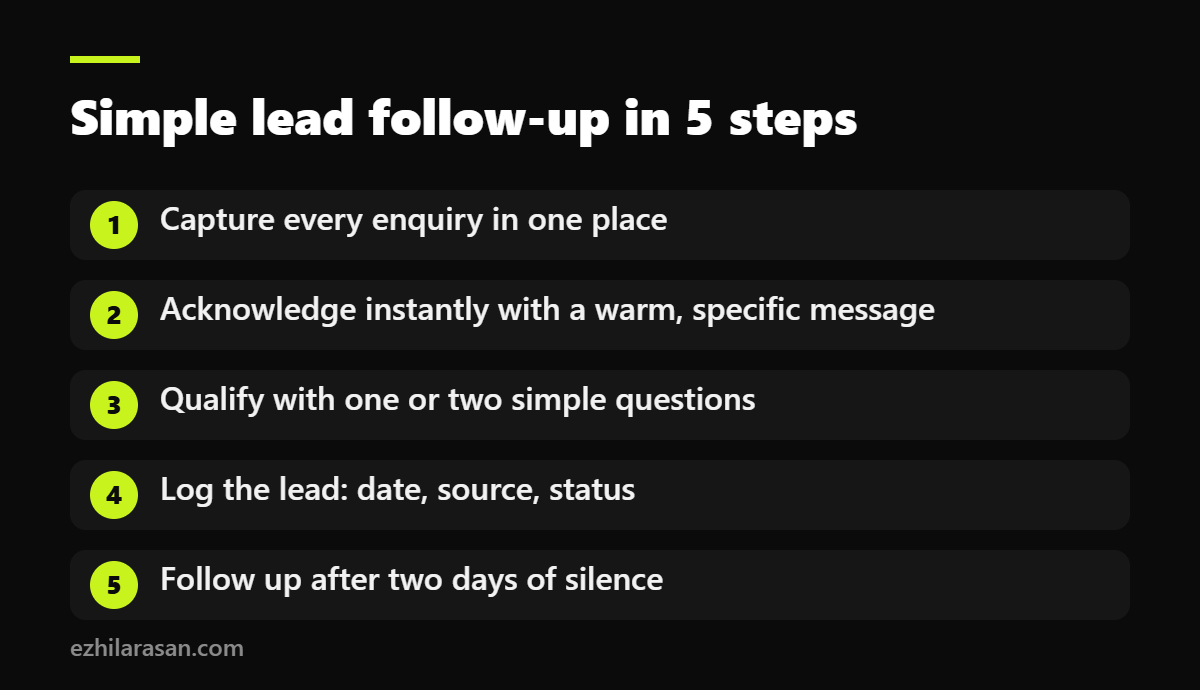
A simple setup you can build in a week
- Capture: make sure every enquiry, whether from your website form, Instagram DMs or ads, lands in one place
- Acknowledge: send an automatic message right away. Warm, short, and specific about timing (“Thanks, Priya. I will message you personally by 11 am tomorrow.”)
- Qualify: ask one or two simple questions, such as what they need and when
- Log: record the lead in a sheet with the date, source and status
- Follow up: schedule a nudge for anyone who has not replied in two days
That’s it. No giant software stack required.
Where AI helps, and where it should stay out
AI is wonderful for drafting, sorting and summarising. It is risky for anything that needs judgement or empathy.
Good uses
- Drafting first replies for you to edit
- Summarising long enquiries into a few lines
- Tagging leads by type or urgency
- Answering simple, repeat questions like timings and location
Keep human
- Pricing discussions and negotiations
- Complaints and sensitive conversations
- Anything involving health, money or legal advice
- The final personal touch before a booking
How to avoid sounding like a robot
This is the part most people get wrong. A few small rules go a long way:
- Write messages the way you would actually speak
- Use the customer’s name and refer to what they asked
- Keep replies short. Two or three sentences is plenty
- Admit when a human will take over (“I will personally follow up”)
- Read your automated messages as if you were the customer. Would you reply?
A word of caution on privacy
If you collect phone numbers or messages, treat them carefully. Only ask for what you need, tell people how you will use it, and do not paste sensitive customer details into public AI tools. Good habits protect your customers and your reputation.
Start with one automation, not ten
The most common mistake is trying to automate everything at once. Pick the single biggest leak, usually slow first replies, and fix that. When it works, add the next. Small, reliable wins beat a complicated setup nobody maintains.
If you would like help mapping this out for your business, my AI automation service focuses on practical lead handling and marketing workflows, built to fit how you already work in Chennai or Bengaluru. Feel free to contact me with a quick description of how enquiries reach you today, and we can figure out the first fix together.

November 3, 2026
You Don’t Need to Go Viral: A Quiet...

November 3, 2026